
The Hidden Costs of Cheap Business Laptops (And How to Spot Them)
- Kamran Hussain
- Jun 2
- 6 min read


For many UK businesses, purchasing affordable laptops seems like a practical way to control IT spending. When organisations need devices for multiple employees, the appeal of lower upfront costs can be difficult to ignore. However, focusing only on purchase price often leads to long-term operational problems that cost far more than expected.
While there are some reliable low-cost laptops for business that UK companies can use effectively, extremely cheap devices frequently create hidden expenses related to maintenance, downtime, poor productivity, shorter lifespans, and cybersecurity limitations.
In 2026, businesses are relying on technology more heavily than ever. Hybrid work, cloud collaboration, AI-powered tools, and cybersecurity requirements mean laptops are no longer basic office accessories. They are essential productivity tools that directly affect employee performance and business continuity.
This guide explores the hidden risks of low-cost business laptops, explains the true total cost of ownership, and helps businesses identify when “saving money” may actually become a costly long-term mistake.
Why Businesses Often Choose Cheap Laptops
Budget pressure is one of the biggest reasons organisations consider cheaper devices. Small businesses, startups, and growing teams often prioritise lower upfront costs when scaling operations quickly.
Businesses may assume:
Basic office work does not require premium hardware
Cheaper devices reduce procurement budgets
Replacing devices frequently is acceptable
All laptops offer similar performance
While this can sometimes work for short-term projects or temporary staff, many organisations later discover significant budget business laptop pitfalls that impact both employees and operational efficiency.
The Difference Between Consumer and Business Laptops
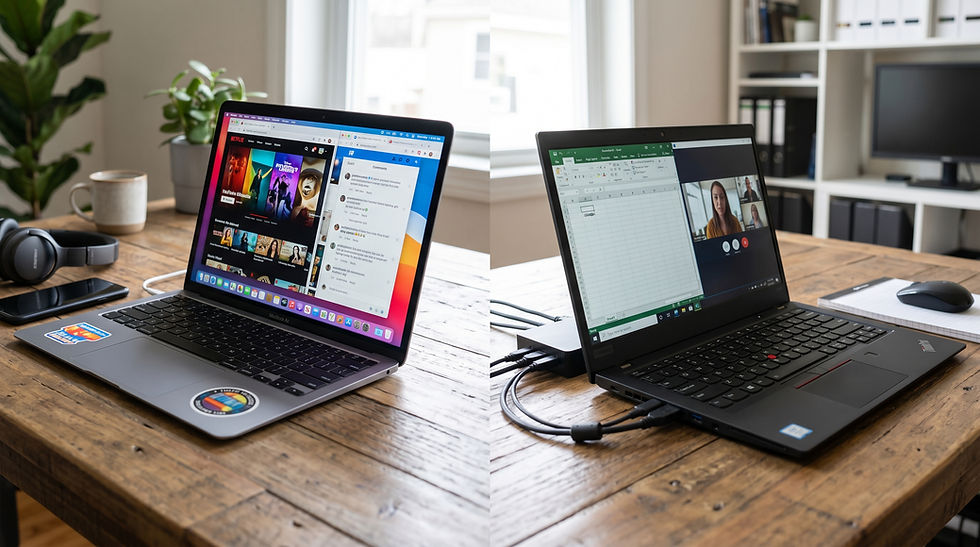
One of the most common procurement mistakes is purchasing low-cost consumer devices for professional environments.
Business-grade laptops are specifically designed for:
Daily heavy usage
Enterprise security
Remote device management
Longer support lifecycles
Better durability
Cheaper consumer laptops often lack:
Advanced security features
Strong build quality
Enterprise warranty support
Fleet management compatibility
This is why the debate around cheap vs expensive business laptop purchasing should focus on long-term value rather than initial pricing alone.
Understanding Total Cost of Ownership
The purchase price of a laptop represents only one part of its actual business cost.
The total cost of ownership of a laptop should include:
Initial purchase price
Maintenance and repairs
Employee downtime
IT support costs
Device lifespan
Productivity impact
Security risks
Replacement frequency
A laptop that costs less upfront may ultimately become more expensive if it fails frequently or reduces employee efficiency.
Productivity Losses Are Often Overlooked
Slow or unreliable laptops directly affect workplace productivity.
Common problems with cheaper devices include:
Long startup times
Poor multitasking performance
Frequent freezing
Limited RAM capacity
Weak battery life
Slow software updates
Even small delays repeated daily across multiple employees can create substantial productivity losses over time.
For example:
Employees waiting for systems to load
Video calls are interrupted by poor performance
Reduced efficiency during multitasking
Frustration caused by unreliable hardware
These issues rarely appear on procurement spreadsheets but significantly impact business operations.
Business Laptop Quality Issues Can Increase Costs

One of the biggest hidden expenses involves ongoing business laptop quality issues.
Lower-end devices often use:
Inferior cooling systems
Lower-quality materials
Weak hinges
Fragile keyboards
Lower-grade batteries
As a result, businesses may experience:
More repairs
Higher maintenance costs
Increased downtime
Shorter replacement cycles
Enterprise-grade devices typically undergo more rigorous durability testing because manufacturers expect them to operate continuously in demanding professional environments.
Battery Life Problems Affect Hybrid Workers
In 2026, hybrid and remote work will remain standard for many organisations.
Employees increasingly need laptops with:
Reliable all-day battery life
Fast charging
Strong wireless connectivity
Cheaper devices often struggle with:
Rapid battery degradation
Limited battery lifespan
Poor energy efficiency
This can disrupt remote productivity and increase employee frustration, particularly for mobile workers and travelling teams.
Security Risks of Cheap Business Laptops
Cybersecurity is another major concern when choosing low-cost devices.
Many budget laptops lack:
TPM 2.0 security chips
Biometric authentication
Hardware encryption support
Enterprise-grade BIOS protection
For businesses handling customer data or remote workforces, these missing security features create significant operational risks.
Lower-quality devices may also:
Stop receiving updates sooner
Lack of enterprise management support
Struggle with modern security software
This increases exposure to cyber threats and compliance issues.
Laptop Reliability for Work Is Critical
Reliability is one of the most important factors businesses should evaluate during procurement.
Strong laptop reliability for work improves:
Employee productivity
IT efficiency
Operational continuity
Remote collaboration
Long-term cost management
Frequent device failures create:
Lost work time
IT support pressure
Project delays
Employee dissatisfaction
A reliable laptop fleet reduces business disruption and improves long-term operational stability.
The False Economy of Cheap Laptops
The phrase false economy cheap laptops describes situations where businesses save money initially but spend more later due to hidden operational costs.
Common examples include:
Devices requiring early replacement
Increased repair frequency
Higher IT support demands
Productivity losses
Security incidents
Poor employee experience
What appears affordable upfront can become significantly more expensive over a device’s lifecycle.
Signs a Business Laptop May Be Too Cheap
Not every affordable laptop is problematic, but businesses should carefully evaluate devices that appear unusually inexpensive.
Warning signs include:
Very Low RAM Capacity
8GB RAM is increasingly insufficient for modern business workloads.
Limited Storage
Small SSDs reduce long-term usability.
Weak Warranty Support
Consumer warranties often lack fast business repair services.
Plastic Build Quality
Fragile construction increases breakage risk.
Poor Battery Specifications
Short battery life limits remote productivity.
Lack of Security Features
Enterprise security compatibility is essential.
Limited Upgrade Options
Non-upgradable devices shorten useful lifespan.
Businesses should assess overall value rather than simply comparing prices.
When Budget Business Laptops Can Still Work
Affordable laptops are not always a poor choice. Some businesses successfully use budget-friendly devices for:
Temporary staff
Basic administrative work
Shared workstation environments
Low-intensity operational tasks
However, even lower-cost systems should still meet minimum business requirements for:
Security
Reliability
Warranty coverage
Performance stability
The key is choosing business-grade value models rather than extremely cheap consumer hardware.
Balancing Cost and Long-Term Value
Successful procurement strategies focus on balancing:
Performance
Reliability
Security
Lifecycle costs
Employee experience
Businesses should avoid both extremes:
Overpaying for unnecessary premium features
Underinvesting in critical operational tools
A mid-range enterprise laptop often delivers the best long-term value for most organisations.
Why Supplier Support Matters
Working with experienced business technology suppliers can help organisations avoid poor procurement decisions.
Specialist suppliers often provide:
Device recommendations
Procurement planning
Fleet standardisation
Warranty management
Lifecycle support
Fulfilment services
Companies like Data Direct UK support UK businesses with workplace technology procurement and scalable business-focused solutions designed for professional environments.
Strong supplier partnerships help businesses make more informed purchasing decisions and improve long-term technology management.
How to Choose Reliable Business Laptops
When evaluating business laptops in 2026, organisations should prioritise:
Performance
Minimum:
Intel Core i5 or Ryzen 5
16GB RAM
SSD storage
Security
Look for:
TPM 2.0
Biometric login
Enterprise management compatibility
Warranty Support
Prefer:
Next-business-day support
Extended warranty options
Build Quality
Choose durable enterprise models designed for professional use.
Battery Life
Target at least:
10–12 hours real-world usage
Scalability
Standardised device fleets simplify IT management.
Common Procurement Mistakes Businesses Make
Buying Solely on Price
Ignoring long-term costs creates operational issues later.
Choosing Consumer Devices
Consumer laptops often fail faster in business environments.
Ignoring Employee Feedback
Poor user experience reduces productivity.
Delaying Device Refreshes
Outdated hardware increases support and security problems.
Failing to Consider Lifecycle Costs
Total ownership matters more than initial purchase price.
Final Thoughts

Cheap business laptops may appear cost-effective initially, but hidden expenses often outweigh short-term savings. Productivity losses, security limitations, reduced reliability, maintenance costs, and shorter device lifecycles all contribute to the true operational cost of low-quality hardware.
Understanding the total cost of ownership of laptop decisions helps businesses make smarter procurement choices focused on long-term value rather than lowest upfront pricing.
While some low-cost laptops for business UK companies use can perform well in limited roles, organisations should avoid the false economy that cheap laptops often create when reliability and performance are compromised.
In 2026, business laptops are critical operational tools. Investing in reliable, secure, and durable systems helps organisations improve employee productivity, strengthen cybersecurity, and reduce long-term operational disruption.
Frequently Asked Questions
Are cheap business laptops a good option for UK businesses?
Some low-cost laptops for business UK companies purchase can work for basic administrative tasks, but extremely cheap devices often create long-term issues related to performance, reliability, security, and maintenance costs.
What are the biggest budget business laptop pitfalls?
Common budget business laptop pitfalls include:
Slow performance
Short battery life
Weak build quality
Limited security features
Frequent hardware failures
Poor warranty support
These issues can reduce productivity and increase long-term operational costs.
What is the total cost of ownership for a laptop?
The total cost of ownership of a laptop calculations include more than the initial purchase price. Businesses should also consider:
Repairs and maintenance
Employee downtime
IT support costs
Productivity losses
Device lifespan
Replacement frequency
A cheaper laptop may ultimately cost more over time.
Why is laptop reliability important for work?
Strong laptop reliability for work helps businesses reduce downtime, improve employee productivity, and minimise IT support issues. Reliable devices are especially important for hybrid and remote teams that depend heavily on uninterrupted access to business systems.
What is the false economy of cheap laptops?
The term false economy cheap laptops refers to situations where businesses save money upfront but later spend more due to poor performance, maintenance problems, early replacements, and reduced productivity. Low initial pricing can sometimes lead to significantly higher long-term business costs.



Comments